Monday, July 26, 2010

Past per se Desserts

1) Cherry, hazelnut, tarragon

2) "Mud Cake", liquid caramel, sassafras
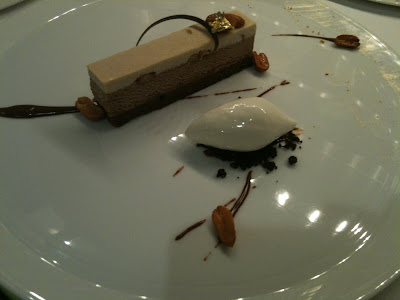
3) "Snickers"

4) Coconut, pineapple


Sunday, July 25, 2010

Hydrocolloids- Pectin

Pectin is a very common hydrocolloid in most kitchens. There is a variety of different types of pectin that react differently to changes in ingredients used. The two most common types of pectin that I have come across are; high methoxyl, and low methoxyl. Both types of pectin are extracted from natural means. Most commonly they are obtained from the skins and pomace of citrus and apples. The two types of pectin mentioned above (high and low methoxyl) differ in the degree of esterification. Esterification meaning in this case a chemical reaction between alcohol and acid reactants. Basically the higher the DM (degree of methylation) the faster the set will be in the pectin. (taking into consideration other ingredients used). High methoxyl pectins are characterized by their; thermoirreversability and ability to gel in high sugar, low pH (acidic) solutions. Low methoxyl pectins are characterized by their; thermoreversability, and ability to gel in the presence of calcium. Whether you are using low or high methoxyl pectins in your formula you must take into consideration a few variables; the ammount of sugar you are using, pH level, calcium level, ammount of solids, and the reactivity of the pectin. By knowing how each ingredient will react to the ammount of pectin used you can begin to formulate recipes to achieve your desired texture and consistency. This will take trial and error...fortunately you can always learn from your mistakes.

Friday, July 23, 2010

VIP Sets Continued...

1) Chocolate, Cherry, Hazelnut
2) Snickers
3) Fresh Fruit Skewer

Sunday, July 18, 2010

Hydrocolloids- Gelatin

Gelatin may be the most common of the hydrocolloids. It is a protein derived from the collagen and connective tissue of animals. Gelatin can usually be found in 2 different forms; powdered or leaf. Gels made using gelatin are characterized by there transparent appearance and are also thermoreversible. Gelatin forms a soft elastic gel that gives a melt in your mouth feeling. When using gelatin as your main gelling agent you have to take into consideration the bloom strength of the gelatin (the gelling strength). Most leaf gelatins are classified by their bloom strength and given names; Bronze, Silver, Gold, and Platinum. Bronze being the weakest and Platinum being the strongest. Gelatin is a very useful hydrocolloid because it can be used synergistically with other gelling agents to give a variety of different textures and properties. To use gelatin you must first hydrate or bloom your gelatin in cold water. I usually throw in a couple ice cubes as well. After a few minutes the gelatin leaf will become elastic and soft. To add your gelatin to your mix you must heat a small portion of the mix and dissolve your bloomed gelatin leaf in the heated mixture. You can then add your heated gelatin mix to your original mix and leave to set. Gelatin is a very versatile hydrocolloid with many uses in the kitchen. It is one of my favorite gelling agents because of its ease of use, the soft elastic texture it gives to your product, and the fact it can be used in conjunction with other gelling agents to form a variety of different textures.

Saturday, July 17, 2010

Words to live by...

Can be found on the walls of Thomas Keller's Restaurants

Wednesday, July 14, 2010

A Few VIP Sets

1) Strawberry, balsamic, passion gel, pistachio crumble, passion sorbet, lemon granite
2) Chocolate Tart, almond crunch, banana sorbet, chocolate sauce
3) Compressed watermelon, passion gel, passion fruit seeds, passion sorbet, lemon granite
4) Strawberry Float


Monday, July 12, 2010

New WD~50 Dessert

Rainbow sherbet, rhubarb, lemon balm, orange, olive oil